
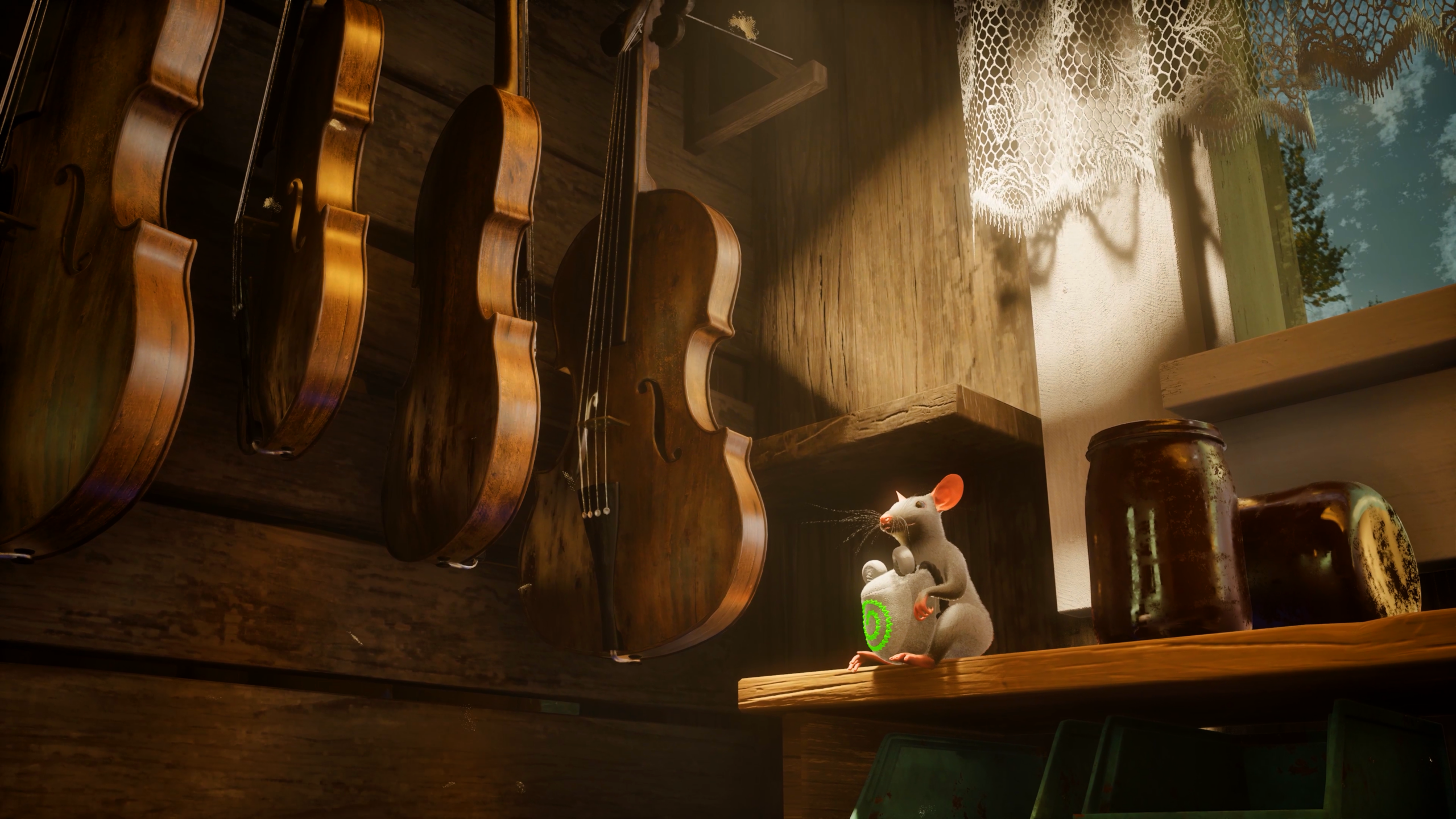
Hela: of Mice & Magic is one of the more genuinely interesting co-op games to appear on the radar lately, not because it does combat differently, but because it removes combat from the equation entirely. If you’ve been watching the cozy game space and wondering whether Hela is doing something structurally new or just riding an aesthetic trend, this breakdown is for you.
Hela: of Mice & Magic proves that co-op engagement doesn’t require combat by building its entire multiplayer loop around timed movement, environmental puzzles, and acts of in-game kindness.
What Hela: of Mice & Magic Actually Is
Hela is a cozy co-op adventure developed by Windup Games, a small studio with Alexander Benitez leading design, and published by Jinderman Publishing. The premise is straightforward on the surface: you play as a tiny mouse exploring a world built at mouse scale, set against a Scandinavian folklore backdrop full of mossy ruins, soft forest light, and the kind of handcrafted visual detail that rewards slow exploration.
The setting is not just aesthetic dressing. Scandinavian folklore carries specific narrative weight, a world where nature is alive with meaning, where small creatures navigate spaces shaped by forces much larger than themselves. Windup Games uses that cultural texture deliberately. The world feels like it has history before you arrive, and your job as a player is to read it rather than conquer it.
What makes Hela worth paying attention to is the central design question it forces onto itself: if there’s no combat, what do two players actually do together for hours? That question has a real answer here, and working through it reveals a co-op structure that’s more considered than most games with full combat systems.
You can wishlist Hela: of Mice & Magic on Steam to follow its development as the team continues building toward release.
The No-Combat Decision and What It Means for Design
Why Removing Combat Is a Structural Choice, Not Just a Vibe
Skipping combat is not the same as making a relaxing game. Plenty of games have light combat and still feel stressful. The decision Windup Games made is structural: they removed the primary engagement loop that most co-op games use to create stakes, pacing, and moment-to-moment feedback. That leaves a design gap that needs filling with something else, and filling it well is genuinely hard.
In developer commentary from Alexander Benitez, the reasoning comes back to identity. The team wanted a game where the tension comes from the world itself, not from enemies. That’s a meaningful distinction. Combat creates external pressure. The kind of tension Hela aims for is internal, the pull of curiosity, the satisfaction of working something out together, the small frustration of a timing puzzle that’s just slightly beyond reach.
What Fills the Combat Slot
Movement and timing take over as the primary skill expression layer. Where a combat game asks you to manage health, cooldowns, and positioning against an enemy, Hela asks you to manage your body through an environment that was not built for creatures your size. A gap that a human character would step over becomes a jump puzzle. A shelf edge becomes a cliff. The world’s scale does a lot of the design work that enemies would otherwise do.
This gets tricky to balance. Too much environmental difficulty and the game stops feeling cozy. Too little and there’s no real engagement. From what Benitez has described, the team threads this by making difficulty feel like discovery rather than failure, which is a harder design goal than it sounds. The next section on mouse scale explains how the world design supports that.
How Mouse Scale Shapes Exploration
Turning Ordinary Spaces Into Layered Worlds
Playing as a mouse transforms the way you read an environment. A kitchen table becomes a plateau. A crack in a wall becomes a corridor. Roots and rocks create vertical terrain that a human-scale character would walk past without noticing. This is one of the areas where Hela’s design does something competitors haven’t examined closely: the scale isn’t a gimmick, it’s the primary world-building tool.
At mouse size, every environment has multiple layers of discovery. The ground level is one experience. Climbing gives you another. Hidden corners that would be invisible to a larger character become entire rooms at mouse scale. That vertical and lateral depth means exploration has genuine texture, you’re not just moving through a space, you’re reading it from a perspective that most games don’t offer.
Scale as a Puzzle Generator
The mouse perspective also generates puzzle opportunities naturally. Heights that would be trivial for a larger character require planning and coordination. Objects become obstacles or tools depending on context. A fallen leaf is cover. A gap between floorboards is a route or a hazard. The environment itself does design work without the team having to construct elaborate puzzle rooms.
The storybook visual style reinforces this. The art direction signals that you’re in a world where small things matter, where the details in the margins of a larger world hold their own stories. That visual language primes players to look carefully and explore slowly, which is exactly the behavior the co-op design rewards.
Co-op Mechanics Built Around Cooperation, Not Competition
What Requires Two Players to Actually Work Together
A lot of co-op games are really single-player games you can play next to someone. Hela’s design pushes against that. The specific mechanics that require coordination, rather than just proximity, are what give the co-op experience its texture.
Timing-based environmental puzzles are the clearest example. One player activates a mechanism while the other navigates the path it opens. Neither player can do both simultaneously. That’s a simple structure, but it creates genuine interdependence. You can’t rush ahead. You can’t solo your way through. The game physically requires both players to be present and paying attention at the same moment.
Core Co-op Mechanics in Hela: of Mice & Magic
- Movement Synchronization: Certain paths and platforms require both players to move in coordinated timing, making environmental navigation a shared skill challenge rather than an individual one.
- Mechanism Activation: One player triggers environmental switches or levers while the other uses the resulting opening, creating clear asymmetric roles within a single puzzle.
- Kindness Acts: Small in-world gestures directed at NPCs or the environment that shape how the world responds, performed together to unlock discoveries or progress narrative threads.
- Potion Brewing: A cooperative crafting activity where both players contribute ingredients or actions simultaneously, producing resources that serve exploration rather than combat.
- Shared Discovery: Environmental storytelling moments that reward both players being present and attentive, rather than one player leading while the other follows.
Handling Different Skill Levels Between Co-op Partners
This is a real challenge for any co-op game targeting mixed-skill groups. If one player is significantly more experienced, they can end up doing most of the work while the other feels like a passenger. Hela’s design addresses this by keeping the difficulty ceiling low enough that a less experienced player can contribute meaningfully without being a bottleneck.
The cooperative structure also means that a more experienced player’s advantage is limited. You can’t outplay your partner in a game with no combat. You can only be more or less helpful. That reframes the relationship between co-op partners in a way that’s genuinely more inclusive than most multiplayer designs.
Magic, Potions, and the Role of Kindness Acts
How Potion Brewing Works as a Cooperative Tool
Potion brewing in Hela functions as a shared crafting activity rather than a solo resource management task. Both players contribute to the process, whether that means gathering ingredients across the environment or performing simultaneous actions during the brewing itself. The output isn’t a combat buff. It’s a tool for exploration, something that opens a new path, reveals a hidden element of the world, or enables a puzzle solution that wasn’t accessible before.
That design choice matters more than it might seem. In most games, crafting is a solo activity you do between sessions of the main engagement loop. In Hela, brewing is part of the main loop. It requires coordination, it produces exploration rewards, and it gives both players something concrete to do together that isn’t fighting anything.
The Magic System as Exploration Infrastructure
The magic system serves the same function. Rather than powering attacks or defenses, magic in Hela appears to interact with the environment directly, revealing hidden paths, affecting how objects behave, or changing the state of the world in ways that open new areas. This keeps magic feeling meaningful without requiring combat to justify its use.
Kindness Acts as a Mechanic
The kindness acts system is one of the more unusual design choices in Hela, and it’s worth understanding what it actually is. These are small in-world gestures, actions directed at NPCs, creatures, or elements of the environment that register as acts of care rather than utility. Performing them together shapes how the world responds to the players.
This mechanic does something clever: it makes collaborative warmth a progression tool. You’re not just being nice for aesthetic reasons. Kindness acts have mechanical weight. They build the kind of world state that unlocks discoveries or advances narrative threads. That connection between tone and system design is rare, and it’s one of the things that makes Hela’s design philosophy feel genuinely thought through rather than just marketed as “cozy.”
Share this article with the person you want to play Hela with. These mechanics are easier to get excited about when you’re reading them together.
Building Tension and Progression Without Enemies
Creating Stakes Without Violence
The honest design challenge here is that combat is a very efficient tension generator. Enemies create time pressure, resource stakes, and clear failure states. Remove them and you need to find other sources of engagement that feel equally real without being stressful in the same way.
Hela handles this through environmental obstacles and timing challenges that have natural consequences rather than punishing failure states. A mistimed jump means you try again, not that you lose health or resources. The stakes are about progress and discovery rather than survival. That’s a different kind of tension, quieter and more patient, but it can be just as engaging for the right player.
Open World Structure as Progression
The open world design supports exploration-driven progression rather than linear combat gates. You don’t unlock the next area by defeating a boss. You unlock it by understanding the environment well enough to find the path through. That shifts the reward from “I beat the obstacle” to “I understood the space.” For players who find that kind of discovery genuinely satisfying, it’s a more durable engagement loop than combat.
The Scandinavian folklore setting provides narrative stakes that replace combat-driven conflict. The world has history, tension, and mystery built into its visual language and lore. You’re not fighting to save the world. You’re exploring to understand it. That’s a different emotional register, and Hela commits to it consistently.
Who Hela Is Designed For
The Target Player and Why the Design Serves Them
Hela is built for families, mixed-skill groups, and players who want a shared experience without the pressure of combat performance. That’s a real audience that most co-op games don’t serve well. Games like It Takes Two are excellent but require sustained attention and some puzzle-solving fluency. A Short Hike is accessible but primarily single-player. Hela sits in a space that’s genuinely underserved: cooperative, gentle, and built for players who want to explore together without one person carrying the other through combat encounters.
Couch co-op as a format choice reinforces this. Playing side by side on the same screen creates a shared physical experience that online co-op doesn’t replicate. You can point at the screen. You can react to the same moment simultaneously. For families or partners playing together, that shared physical presence matters.
Inclusivity as a Design Constraint, Not Just a Goal
The no-combat decision is also an accessibility decision. Combat systems create performance gaps between players of different skill levels and reaction speeds. Remove combat and those gaps shrink considerably. A player who has never played a video game before can contribute meaningfully to a Hela session in ways they couldn’t in most co-op games. That’s not an accident. It’s a direct result of building the engagement loop around exploration and cooperation rather than combat performance.
How Hela Compares to Other Non-Combat Co-op Games
Reference Points Without Reducing Hela to a Clone
It Takes Two is the obvious comparison for cooperative puzzle design, and it’s a useful one. Both games require genuine coordination and build puzzles around two players working together. But It Takes Two has combat sections and a more intense emotional tone. Hela is softer in both respects, more interested in wonder than conflict.
A Short Hike is a closer tonal match, a small game about exploration and small moments of connection. But it’s single-player by design. Hela takes that same gentle sensibility and builds a co-op structure around it, which is a different technical and design challenge.
Unravel Two is worth mentioning because it shares the small-creature scale and the cooperative movement mechanics. But its world is more melancholy and its puzzles more physically demanding. Hela’s Scandinavian folklore setting gives it a distinct visual and narrative identity that doesn’t overlap cleanly with any of these comparisons.
What Hela Does That Others Don’t
The mice-scale world design, the kindness-as-mechanic approach, and the folklore setting combine into something that doesn’t exist elsewhere in the co-op space. Some social coverage has suggested the concept feels like it’s “running out of ideas” by avoiding combat, but that misreads what’s happening. Avoiding combat isn’t a limitation. It’s a constraint the team chose to build around, and the specific systems they’ve developed in response to that constraint are the interesting part.
Players who will get the most from Hela are those who find discovery genuinely satisfying, who want a co-op experience that feels collaborative rather than competitive, and who are looking for something they can share with someone who doesn’t play games often. If that’s you, or if that’s the person you want to play with, Hela is worth watching closely.
FAQ: Hela Co-op and Non-Combat Design
Does Hela have combat?
No. Hela: of Mice & Magic is built entirely without combat. The engagement loop centers on exploration, environmental puzzle-solving, potion brewing, and small acts of kindness rather than fighting enemies. This is a deliberate structural choice by Windup Games, not a feature gap.
How does co-op work in Hela: of Mice & Magic?
Hela is designed for two players who must coordinate to navigate the environment and solve puzzles together. Specific mechanics require one player to activate a mechanism while the other moves through the resulting path. Potion brewing and kindness acts also involve both players contributing simultaneously. The design prevents one player from simply carrying the other.
Is Hela a cozy game?
Yes, Hela fits within the cozy game category by tone, visual style, and pacing. It’s set in a Scandinavian folklore world rendered in a soft, storybook aesthetic with no combat pressure. What makes it distinct within the cozy space is that its cooperative mechanics are genuinely interdependent rather than just decorative.
Is Hela accessible for non-gamers?
The design is built with mixed-skill groups in mind. Removing combat eliminates the performance gaps that typically separate experienced players from newcomers. A player with little gaming experience can contribute meaningfully to exploration and puzzle-solving without being a bottleneck for a more experienced partner.
What platforms is Hela: of Mice & Magic planned for?
Hela has been shown in Xbox coverage and is available to wishlist on Steam. Check the official Hela game page for the most current platform information as development continues.
How does Hela compare to It Takes Two?
Both games require genuine co-op coordination and build puzzles around two players working together. It Takes Two includes combat sections and has a more emotionally intense narrative. Hela is gentler in both difficulty and tone, with a focus on exploration and discovery rather than narrative conflict, and it targets a more inclusive audience including families and mixed-skill groups.

- How Hela Designs Co-op Around Exploration Instead of Combat - September 16, 2026
- Write Once, Click Never: Automating Repetitive Unity Tasks with Editor Scripts - September 13, 2026
- ScriptableObject Event Systems: Decoupling Unity C# Without Overengineering - September 13, 2026


